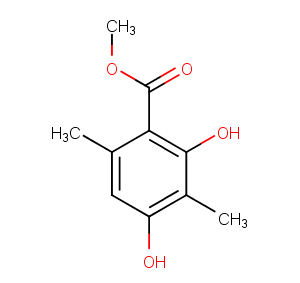
Atraric acid (Synonyms:2,4-二羟基-3,6-二甲基苯甲酸甲酯;橡苔;阿彻瑞酸;甲基2,4-二羟基-3,6-二苯甲酸乙酯;2,4-二羟基-3,6-三甲基苯甲酸甲酯,橡苔;EVERNYL 2,4-二羟基-3,6-二甲基苯甲酸甲酯;二羟基二甲基苯甲酸甲酯)
目录号 : KE2932 CAS No. : 4707-47-5 纯度 : ≥95%
Atraric acid derivatives as a new chemical lead structure for novel therapeutic compounds as AR antagonists, that can be used for prophylaxis or treatment of prostatic diseases. It inhibits PTP1B activity in a dose-dependent manner with IC50 values of 51.5 uM, suggest that atraric acid has potential to treat diabetes.
规格 价格 是否有货 数量
5mg
In-stock
10mg
In-stock
25mg
In-stock
50mg
In-stock
100mg
In-stock

Other Forms of Rapamycin:

KKL Med 的所有产品和服务仅用于科学研究,不能被用于人体,兽医,我们也不向个人提供产品和服务。
生物活性
Atraric acid derivatives as a new chemical lead structure for novel therapeutic compounds as AR antagonists, that can be used for prophylaxis or treatment of prostatic diseases. It inhibits PTP1B activity in a dose-dependent manner with IC50 values of 51.5 uM, suggest that atraric acid has potential to treat diabetes.
分子式
C10H12O4
分子量
196.2
CAS号
4707-47-5
中文名称
2,4-二羟基-3,6-二甲基苯甲酸甲酯
运输条件
Room temperature in continental US; may vary elsewhere.
储存方式
Powder -20°C 3 years
  4°C 2 years
In solvent -80°C 6 months
  -20°C 1 month
溶解性数据
In Vitro: 

DMSO : 100 mg/mL (509.68 mM; Need ultrasonic)

配制储备液
浓度 溶剂体积 质量 1 mg 5 mg 10 mg
1 mM 5.0968 mL 25.4842 mL 50.9684 mL
5 mM 1.0194 mL 5.0968 mL 10.1937 mL
10 mM 0.5097 mL 2.5484 mL 5.0968 mL
*

请根据产品在不同溶剂中的溶解度选择合适的溶剂配制储备液;一旦配成溶液,请分装保存,避免反复冻融造成的产品失效。
储备液的保存方式和期限:-80°C, 6 months; -20°C, 1 month。-80°C 储存时,请在 6 个月内使用,-20°C 储存时,请在 1 个月内使用。

In Vivo:

请根据您的实验动物和给药方式选择适当的溶解方案。以下溶解方案都请先按照 In Vitro 方式配制澄清的储备液,再依次添加助溶剂:

——为保证实验结果的可靠性,澄清的储备液可以根据储存条件,适当保存;体内实验的工作液,建议您现用现配,当天使用; 以下溶剂前显示的百
分比是指该溶剂在您配制终溶液中的体积占比;如在配制过程中出现沉淀、析出现象,可以通过加热和/或超声的方式助溶

  • 1.

    请依序添加每种溶剂: 10% DMSO → 90% corn oil

    Solubility: ≥ 2.5 mg/mL (12.74 mM); Clear solution

    此⽅案可获得 ≥ 2.5 mg/mL (12.74 mM,饱和度未知) 的澄清溶液,此⽅案不适⽤于实验周期在半个⽉以上的实验。

    以 1 mL ⼯作液为例,取 100 μL 25.0 mg/mL 的澄清 DMSO 储备液加到 900 μL ⽟⽶油中,混合均匀。

     
The molarity calculator equation
Mass (g) = Concentration (mol/L) × Volume (L) × Molecular Weight (g/mol)
The dilution calculator equation
Concentration (start) × Volume (start) = Concentration (final) × Volume (final)
This equation is commonly abbreviated as: C1V1 = C2V2